Welcome to the European Association for Cancer Research
Connecting cancer researchers together

Cancer Research Conferences
FREE WEBINAR | 'Rapid and accurate pan-cancer subtyping using RNA-sequencing' EACR and Oxford Nanopore webinar
Online, Worldwide
20 July 2026
(Click here to add to your Calendar)
16:00 - 17:00 CEST on Zoom
This free webinar is hosted in collaboration with Oxford Nanopore Technologies, one of our valued EACR Industry Partners. In this webinar we will welcome Dr. Adam Shlien from the University of Toronto, who will present his research on rapid and accurate pan-cancer subtyping using RNA-sequencing. We will also hear from Dr. Patrick Murphy from Oxford Nanopore Technologies, who will introduce scalable transcriptomics with Nanopore sequencing.
Talk abstracts
'Rapid and accurate pan-cancer subtyping using RNA-sequencing' Dr. Adam Shlien, University of Toronto, Canada
Childhood cancers differ from their adult counterparts in ways not fully explained by their genomes, motivating RNA-based approaches to capture the transcriptional diversity that defines them. We built a multiscale transcriptomic atlas of childhood cancer, which matched or clarified the diagnosis for 85% of pediatric tumors in a prospective cohort (Comitani et al., Nature Medicine, 2023). We then used Nanopore direct-RNA and cDNA sequencing, as part of the SickKids–CHU Sainte-Justine PCHP partnership, to deliver rapid tumor classification, subtyping, and fusion detection. Our RNA-based pan-cancer classifier reached high top-class confidence within hours and shows strong agreement with clinical diagnoses. In real-world cases, direct RNA-seq identified actionable gene fusions within days of sample receipt, redirecting care toward targeted therapy. Our ongoing collaboration with Aga Khan University in Nairobi illustrates the potential of this approach to broaden access to precision diagnostics globally.
'Scalable Transcriptomics with Nanopore Sequencing: Product Updates' Dr. Patrick Murphy, Oxford Nanopore
Oxford Nanopore transcriptomics workflows continue to expand the information researchers can access from RNA sequencing experiments. In this brief update, we will highlight recent developments across the nanopore transcriptomics portfolio, including updated cDNA-PCR sequencing for full-length transcript discovery and quantification, direct RNA sequencing for native RNA analysis, and new multiplexing options designed to support more flexible experimental designs. We will also introduce improvements to analysis workflows, including EPI2ME wf-transcriptomes. Together, these updates provide researchers with expanded options for studying transcript isoforms, gene expression, RNA modifications, and poly(A) tails using scalable nanopore sequencing workflows.
Speakers
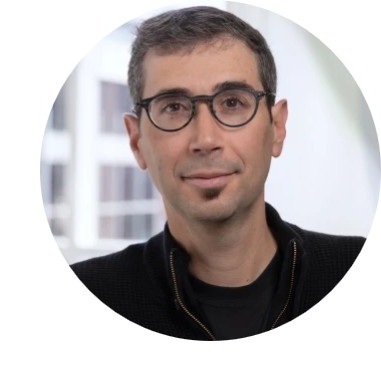 Dr. Adam Shlien
Senior Scientist and Lab Director, The Hospital for Sick Children (SickKids), Toronto, Canada; and the University of Toronto
Dr. Shlien is a Senior Scientist and Lab Director at the Hospital for Sick Children with over 20 years of experience in bioinformatics and genomics. He holds the Garron Family Chair in Childhood Cancer Research and is a Professor at the University of Toronto. He leads a computational oncology lab, which has used insights from research, to design, validate, and implement novel genomics tests that are in current use at his hospital. After completing his PhD at the University of Toronto, Dr. Shlien did his post-doctoral training at the Wellcome Trust Sanger Institute, supported by a H.L. Holmes Award. He designed some of the earliest integrative genomics studies, discovering the direct transcriptional consequences of somatic mutation. Dr. Shlien has made multiple discoveries into the mutational processes leading to childhood cancer, receiving additional awards including the St Baldrick’s Arceci award for “out of the box” research in pediatric cancer. Dr. Shlien and collaborators have recently introduced a novel diagnostic framework for cancer based on a detailed understanding of their transcriptional uniqueness.
Dr. Patrick Murphy
Market Segment Manager for Single Cell, Oxford Nanopore Technologies
Patrick Murphy holds a PhD in Immunology from the University of Rochester and is currently the Market Segment Manager for Single Cell at Oxford Nanopore Technologies, where he focuses on supporting researchers in leveraging long-read sequencing technologies to explore cellular heterogeneity and complex biological systems. He previously worked at 10x Genomics as a Science and Technology Advisor, supporting scientists in their use of single-cell and spatial transcriptomics tools.
Open to all, you do not need to be an EACR member to attend.